A record, and what it says
On 8 September 2026, Mistral AI announced a 3 billion euro Series D funding round, with a post-money valuation of over 21 billion euros. According to the company, this is the largest equity funding round ever raised by a European technology company, three years after its founding. The round is led by Samsung Electronics, alongside the Scaleup Europe Fund, a fund backed by the European Union and managed by EQT, and historical investor PSG Equity. A year earlier, the Series C led by Dutch company ASML valued the company at 11,7 billion euros: the value has therefore nearly doubled in twelve months.
Context matters as much as the amount. As France Inter noted on the day of the announcement, concern was growing around the French champion: no major model since December 2025, and a summer decision to host third-party models, particularly Chinese ones, interpreted by some as a retreat to the simple business of infrastructure leasing. The funding round also serves as a response to these doubts.
From model to infrastructure
The stated use of funds is clear: increase computing power to train larger models, expand infrastructure, and accelerate international commercial development. On CNBC, Arthur Mensch summarized the long-term goal: to rely entirely on capabilities that Mistral builds itself, which implies that the computing power owned by the company will grow by about 100 % over the next five years. According to France Inter, the startup will quadruple the computing power allocated to its infrastructure and promises a new cutting-edge model, Large-4, by the end of 2026.
This strategy was already underway before the Series D:
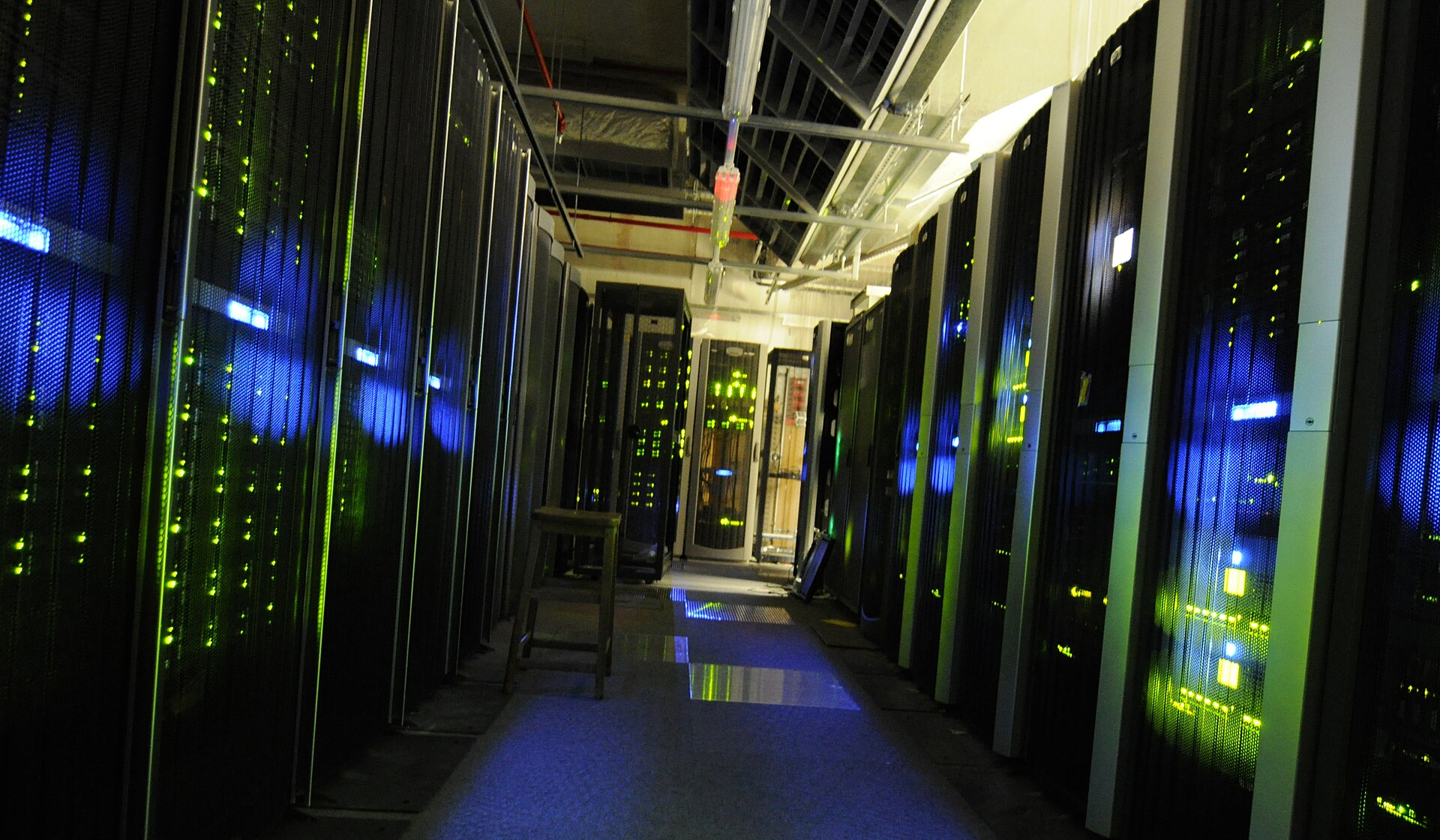
- in March 2026, Mistral raised 830 million dollars in debt from seven banks (Bpifrance, BNP Paribas, Crédit Agricole CIB, HSBC, La Banque Postale, MUFG and Natixis) to finance 13 800 Nvidia GB300 chips in its data center in Bruyères-le-Châtel (Essonne), bringing its capacity to 44 MW;
- the company aims for 200 MW capacity in Europe by the end of 2027 and 1 GW by 2030;
- she is a shareholder, alongside the Emirati fund MGX, Bpifrance and Nvidia, of Campus IA, a campus project of 1,4 GW in Fouju (Seine-et-Marne), for which the work on the electrical substation was entrusted to Eiffage in June 2026.
In July 2026, Microsoft also committed, for an undisclosed amount of "several billion dollars", to using part of Mistral's European capacities for its own cloud and AI services.
Catching up with American labs?
On 29 September, in a new interview with CNBC, Arthur Mensch stated that the lead of American labs was "not extremely large" and that Mistral's next model would reduce the gap "very significantly". He justifies the fundraising by the need to finance computing in order to "control our own destiny". On France Inter, he asserts that "everything is decided within a few months in general".
The order of magnitude calls for caution. Mistral's 3 billion euros remain modest compared to the amounts raised by American leaders; France Inter recalls that OpenAI is aiming for a fundraising twenty times larger during its future IPO. Mistral's bet is therefore less about a head-on race for the largest model than about a comprehensive offering, from open models to computing through products, aimed at companies and states that want to keep control of their data. Mistral claims more than 125 large corporate clients in 20 countries, including Airbus, ASML and HSBC, and Arthur Mensch says he expects to exceed one billion dollars in annual recurring revenue this year.
A sovereignty with variable geometry
The funding round illustrates the paradox of the "sovereign champion". The lead investor is South Korean; PSG Equity, BlackRock, Advent, a16z, Nvidia or Salesforce Ventures are American; Bpifrance, the Grand Duchy of Luxembourg, Eurazeo or the Scaleup Europe Fund, of which the European Commission is one of the investors, provide the European share. Emmanuel Macron hailed an operation illustrating the Franco-Korean ambition to build a "third way" in AI.
Material dependence remains: Mistral's data centers run on Nvidia chips, and its main commercial partner remains Microsoft. The sovereignty that Mistral sells is therefore not technological autarky. It is a capacity for control: open-weight models that customers can deploy on their own premises, computing located in Europe, data that does not leave the organization's perimeter. This more realistic definition shifts the political question: it is no longer about producing every component in Europe, but about ensuring that no single supplier can cut off access.
What Europe should take away from this
For public authorities, three lessons emerge. First, the key battleground is energy and electrical grid connections: the Bruyères-le-Châtel and Fouju projects depend as much on the power grid as on investors. Second, public procurement and major European accounts play a decisive role, because Mistral's strategy relies on customers willing to pay for control. Finally, the arrival of an EU-backed fund in its capital marks a shift: Brussels is no longer just regulating AI, it is beginning to finance it.
The test of facts remains. If Large-4 lives up to its promises and the announced capabilities materialize, the September 2026 fundraising will mark the moment when Europe equipped itself with an integrated AI player. Otherwise, it will have mainly highlighted the gap in resources with the United States.
Sources: Mistral AI, Series D press release (8 Sept. 2026) ; CNBC, 8 Sept. 2026 ; CNBC, interview with Arthur Mensch, 29 Sept. 2026 ; France Inter, "Nos vies numériques", 8 Sept. 2026 ; TechCrunch, 8 Sept. 2026 ; CNBC, debt of 830 M$, 30 March 2026 ; Linklaters, financing of Bruyères-le-Châtel GPUs ; Microsoft, expanded partnership, 21 July 2026 ; MGX, Campus IA, 2 June 2026 ; Campus AI, Eiffage press release, 2 June 2026.


