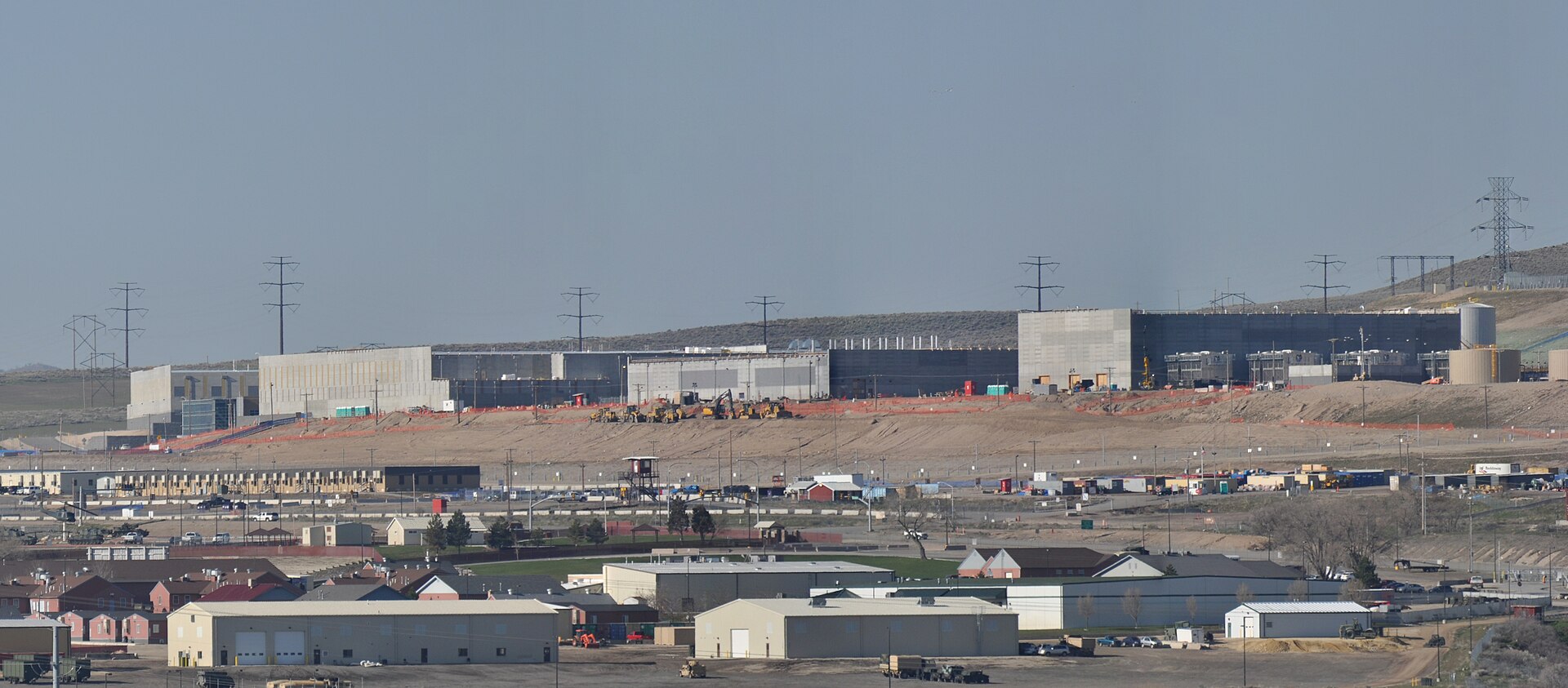
Google's largest investment in Europe
On 9 September 2026, Google announced its intention to invest at least 13 billion euros in its digital infrastructure in Finland over two years, in 2027 and 2028. The company presents this as its largest single investment in Europe. It is not only about expanding the historic site of Hamina, a former paper mill bought in 2009 and converted into a data center, but also about developing infrastructure in Kajaani, Muhos and Vaala, further north in the country.
Google itself estimates the expected benefits: an average contribution of 3,6 billion euros per year to Finland's GDP during the construction phase, more than 37 000 jobs supported in the country, including around 16 000 in construction, then 7 000 jobs per year once the facilities are operational, counting subcontractors and local businesses. These projections come from the company and will need to be compared with the reality of the construction sites. Added to this are 31 million euros over four years for local education and economic development initiatives, including 10 million for research and innovation.
Ruth Porat, president and chief investment officer of Alphabet and Google, sees this as a desire to "develop our presence responsibly," by combining infrastructure, new energy capacities and measures to promote affordable electricity prices. Finnish Prime Minister Petteri Orpo, for his part, welcomes a decision that constitutes "a clear testament to our strengths."
Energy, the heart of the investment
The announcement is as much an energy agreement as a digital project. Google has signed a power purchase agreement with Finnish energy company Fortum for 22 years to support the life extension program of the Loviisa nuclear power plant, near Hamina. According to Google, this plant provides about 10 % of Finland's electricity and would not have been able to operate beyond 2030 without this program. The two companies have also signed a memorandum of understanding to study new production capacities, including possible new reactors at Loviisa.
The arrangement also includes onshore wind contracts bringing the new capacity supported by Google to 629 MW, and a 94 MW battery near Kajaani, expected by the end of 2027. With grid operator Fingrid, Google has chosen to locate its new sites in the north, where the grid has capacity near decarbonized production, limiting additional grid investments.
The choice of Finland is easily explained: according to the Finnish Energy federation, 96 % of the electricity produced in the country in 2025 was CO2 neutral, with 39,6 % nuclear, 27,9 % wind, and 15,6 % hydro. Added to this is a cold climate, favorable for cooling, and a long experience in heat recovery: in Hamina, the waste heat from the data center is expected to cover 80 % of the annual needs of the district heating network, according to Google.
A national victory, a European question
For Finland, the operation is a success in terms of attractiveness. For Europe, it raises a more delicate question. According to Synergy Research Group, Amazon, Microsoft, and Google held about 2024 70 % of the European cloud market in , compared to about 15 % for all European providers, a share that has fallen since 2017 before stabilizing. Each massive investment by an American hyperscaler on European soil physically brings computing capacity closer to European users, but also reinforces the dominant position of these players.
The location of servers does not resolve the legal issue either. In July 2025, Microsoft France's legal director acknowledged under oath that the company could not guarantee that French citizens' data would never be transmitted to U.S. authorities without French authorization, reports DatacenterDynamics. The finding goes beyond Microsoft: it concerns any company subject to U.S. law, regardless of where their machines are located.
Brussels wants to triple its capacity, without guaranteeing who will own it
The European Union is seeking to close its gap in computing capacity. On 3 June 2026, the Commission proposed the Cloud and AI Development Act, which aims to at least triple European data center capacity in five to seven years, simplify permits, and facilitate access to energy, water, and land. The text also includes a component on autonomy, with criteria for public procurement of cloud services.
The debates show the difficulty of reconciling the two objectives. The European Economic and Social Committee warned in September that, without public contracts oriented toward European services, new capacity could primarily benefit the large non-European providers that already dominate the market. Conversely, the Bruegel think tank emphasizes that overly strict sovereignty criteria could drive up computing costs and slow the deployment the Union is seeking to accelerate.
What the Finnish case reveals
Google's investment in Finland illustrates a new geography of AI in Europe: data centers follow decarbonized and available electricity, cold temperatures, and grid capacity. Nordic countries, like France with its nuclear power, thus have a real advantage in the race for infrastructure.
But sovereignty is not measured in megawatts installed on the territory. It depends on who owns the infrastructure, which law applies to their operators, and the ability of European players to offer a credible alternative. Finland has obtained concrete guarantees: support for its nuclear fleet, new renewable capacities, recovered heat, local funds. It is now up to the Union to define, notably through the Cloud and AI Development Act and its public procurement, what it expects in return for these investments, beyond jobs and growth.
Sources : Google Cloud, « Google Deepens Commitment to Finland with Two-Year €13 Billion investment in AI Infrastructure », 9 septembre 2026 ; Finnish Energy (Energiateollisuus), production d'électricité en Finlande en 2025 ; Synergy Research Group, « European Cloud Providers' Local Market Share Now Holds Steady at 15% », 24 juillet 2025 ; DatacenterDynamics, 27 juillet 2025 ; Commission européenne, proposition de Cloud and AI Development Act, 3 juin 2026 ; CESE, avis sur le Cloud and AI Development Act, 29 septembre 2026 ; Bruegel, « How can Europe address its pressing AI compute infrastructure shortfall? », 10 septembre 2026.


